
Guide
What Actually Happens When We Show Up
A plain look at what Midland Garage Door Pros actually checks on a service call, and why houses built between 1952 and 1994 change what we look for first.
Local detail
Checking It Yourself
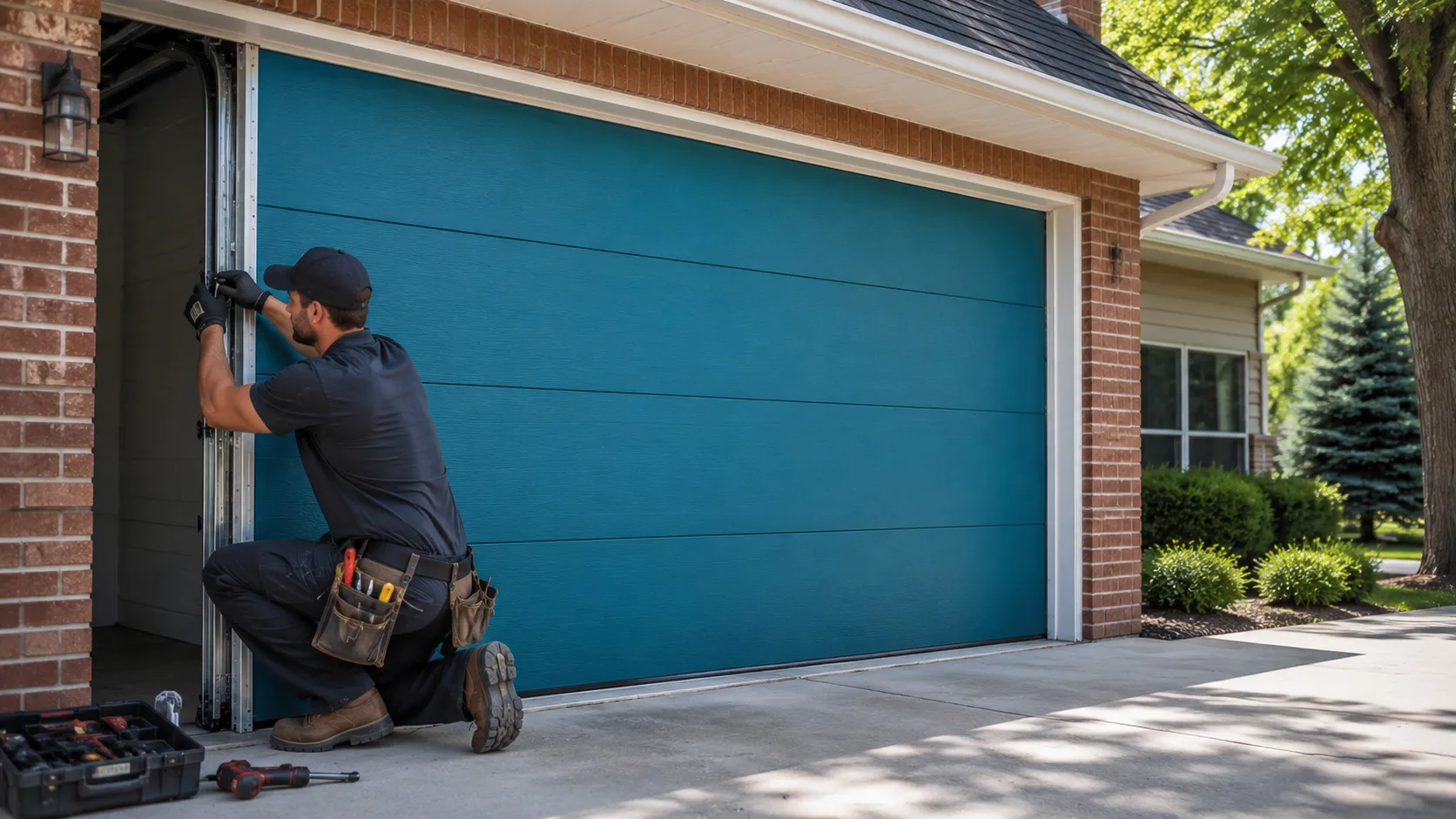
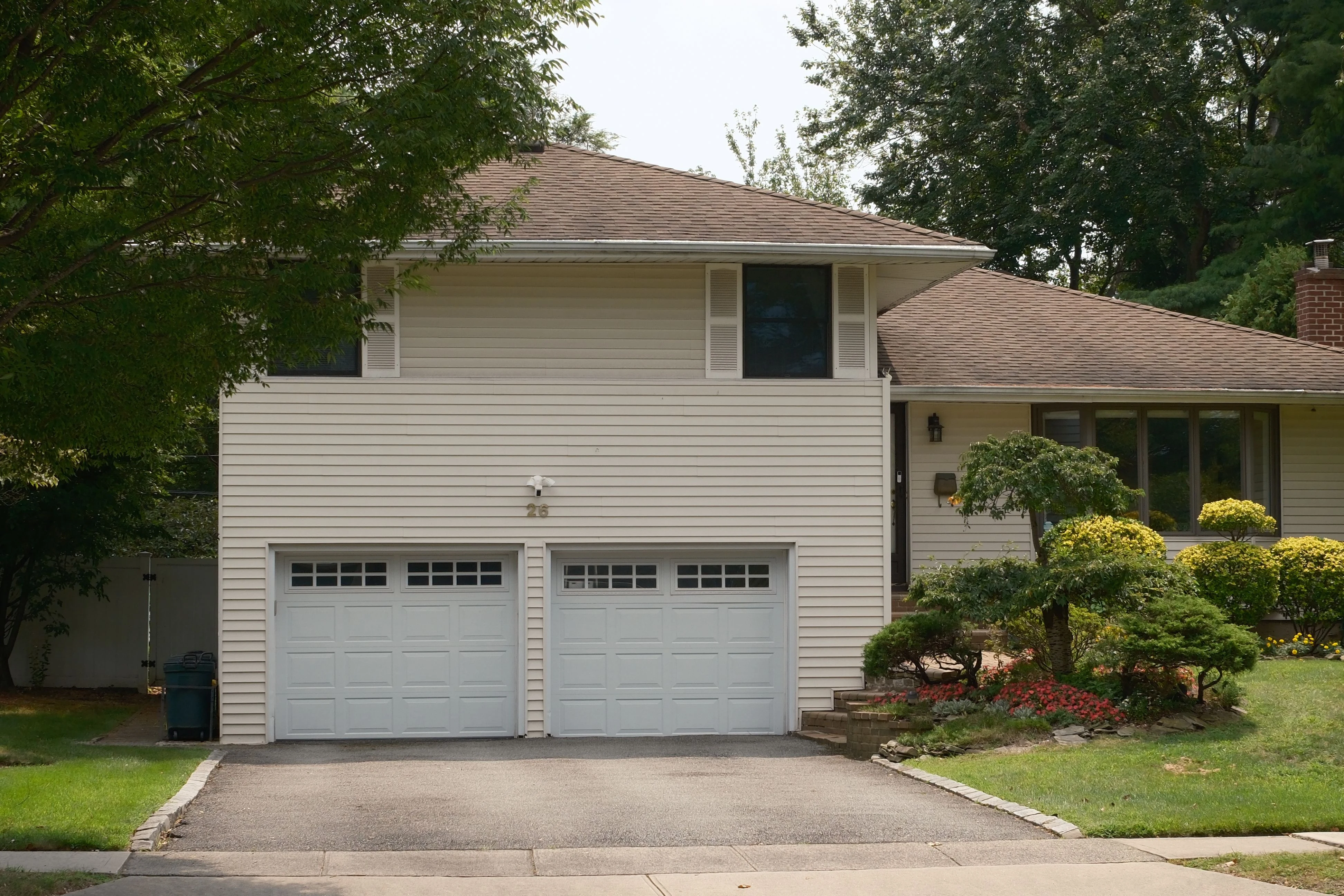
Before you pick up the phone, there's a short list of things worth a look. Pull the release handle with the door closed and see if it lifts by hand to about waist height and stays there - that's a rough balance check, and it matters more here than in newer subdivisions because so much of this area's housing dates to 1952 through 1994, with the bulk of it built in the 1960s and 70s. That means original torsion hardware on a lot of doors, and springs that have had fifty-plus winters of cold-and-thaw cycling on them. Look at the track for daylight gaps where it meets the wall brackets, and listen for a grinding or popping sound when the door runs - that's usually a roller or a bearing, not something urgent.
What you should not do is touch the spring itself, loosen the set screws, or try to true up a bent track with a pipe wrench. If the door won't lift by hand, or the cable looks frayed at the drum, stop there. That's the line between a homeowner check and a service call, and on hardware this old, it's not worth guessing on.
The area
Leaving It Alone
A torsion spring under tension can put someone in the hospital, and on a door installed anywhere near the 1973 median build year for this area, that spring has had decades to fatigue in ways you can't see from the garage floor. Same goes for the cables and the bottom brackets - they're under load even when the door looks like it's just sitting there. We also won't tell you to just add oil to everything and call it fixed.
Spraying WD-40 on a noisy roller can quiet it for a week and gum up the track for a year. What we're not going to do on a first visit, either, is replace parts that aren't the problem - if the opener is fine and it's a $30 roller, that's what goes on the invoice, not a new drive unit. The honest limit here: if the door is original to a house from the 1960s or 70s and the track, spring, and opener are all failing at once, patch repair stops making sense and we'll say so instead of running up a bill on hardware that's done.
What we find
The Situation
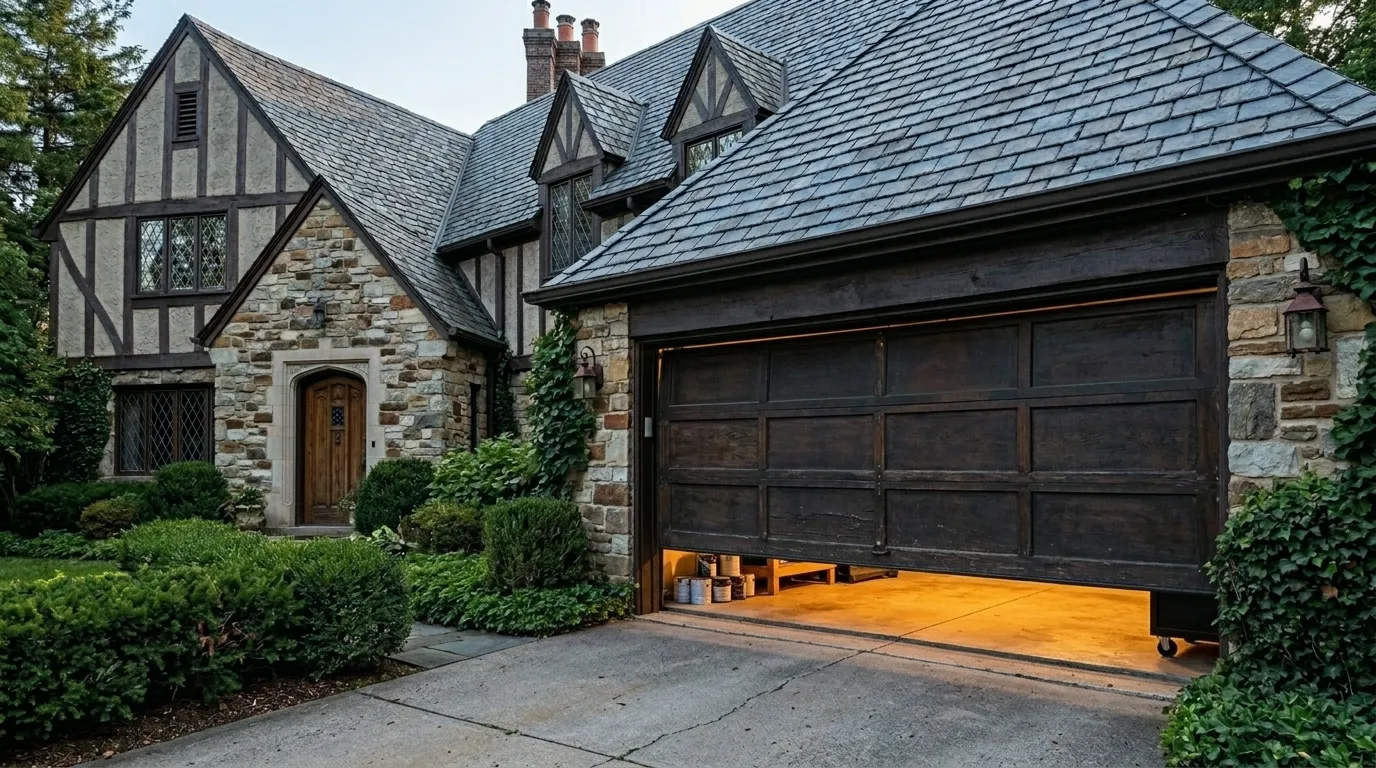
A service call starts with the same walk-through every time: balance test, spring condition, cable and drum check, track alignment, roller and hinge wear, opener force and reverse-safety test, and weatherseal condition at the bottom panel. On the older stock common across this area's roughly 16 named neighborhoods, we're also checking whether the track spacing and drum size match what a modern spring kit expects, because plenty of 1960s and 70s installs used hardware sizing that isn't standard anymore. That's the part that turns a routine call into a longer one - not because the job is harder, but because matching thirty- or forty-year-old parts sometimes means special-ordering rather than pulling stock off the truck.
We tell you that up front rather than after the fact. Across the roughly 18,597 households and 13,974 owner-occupied houses in this service area, the pattern repeats often enough that we plan for it: diagnose first, quote the real fix, and only replace what's actually failed.
How we work
How Local Conditions Play In
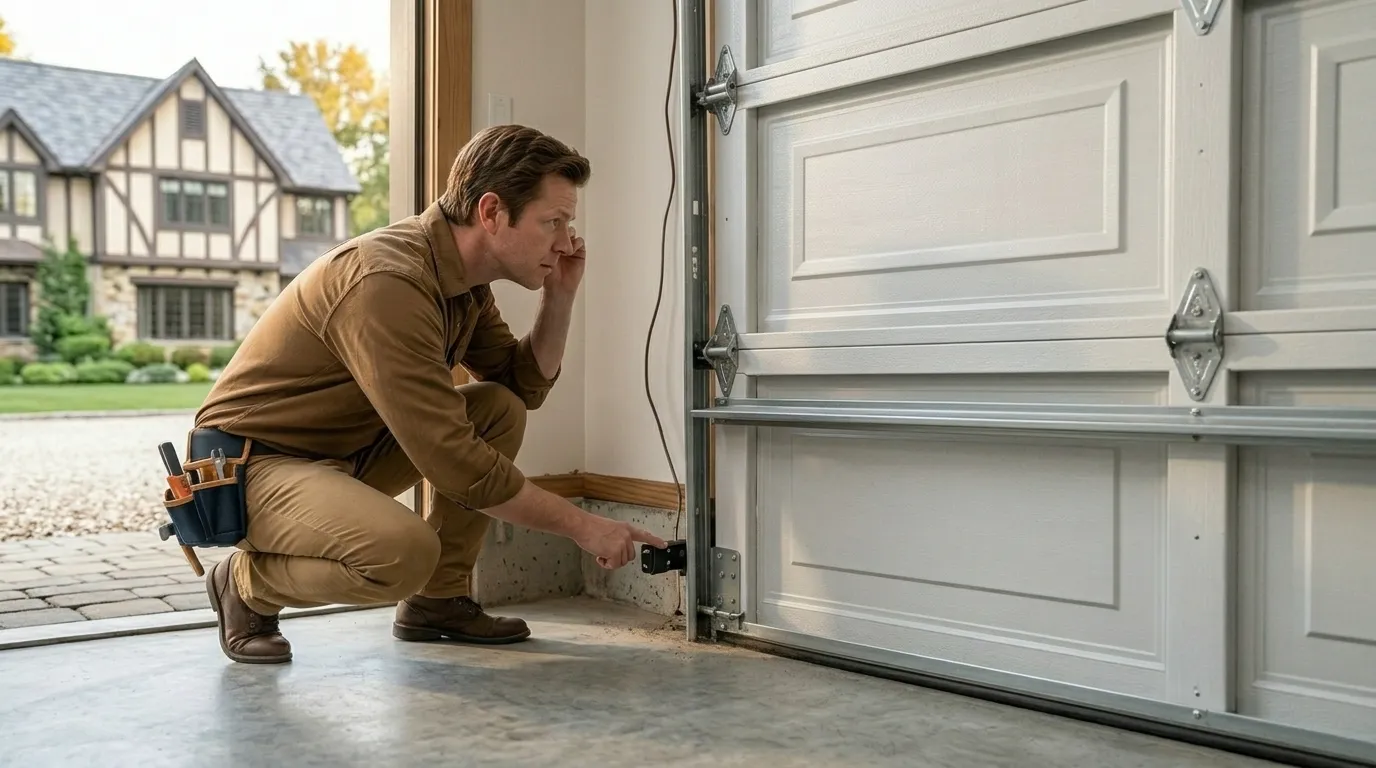
This area sits in a COLD severe climate band, and that changes what actually breaks. Steel springs lose tension faster in hard winter cycling, torsion bars contract and can bind in cold brackets, and nylon rollers get brittle enough to crack in a hard freeze. Combine that with housing mostly built between 1952 and 1994 - original hardware from an era before insulated doors and sealed bottom brackets were standard - and you get a specific failure pattern: spring snap in January, track binding after a cold snap, weatherseal that's shrunk away from the slab.
We run calls out to towns like Homer, 5 miles off, and as far as Essexville, 20 miles out, and the climate math doesn't change across that radius - it's the same cold, the same building era, mostly the same 1960s-70s door stock. Median household income here runs around $78,155, and what that tends to mean in practice is more repair calls than full-replacement calls - people fixing the door they have rather than swapping it out early.
Questions
Common questions
How do I know if it's the spring or the opener?
Pull the manual release with the door closed and try lifting it by hand. If it's heavy, drops on its own, or won't stay up around waist height, that's spring tension, not the opener. If the door lifts fine by hand but the opener won't run it, the motor or the circuit board is more likely the problem.
Why does my door act up more in winter?
This area sits in a severe cold climate band, and steel springs and tracks contract in hard freezes. On older doors - a lot of the stock here was built in the 1960s and 70s - that contraction is enough to bind a track or finish off a spring that was already fatigued.
Is it normal for parts to be hard to find on an older door?
On houses built well before 1994, yes. Track spacing, drum sizing, and spring dimensions from that era don't always match current stock, so a repair on original hardware can take longer to source parts for than a repair on a newer door.
Ready when you are
Need a garage door sorted in Midland?
Midland Garage Door Pros repairs and installs garage doors, springs and openers in Midland, MI and the surrounding area.