
Guide
What That Sound From Your Garage Door in Midland Actually Means
Grinding, popping, or slamming garage door in Midland? Learn which noises point to aging 1960s-70s hardware and cold-weather wear, and which need a call now.
Local detail
Checking It Yourself
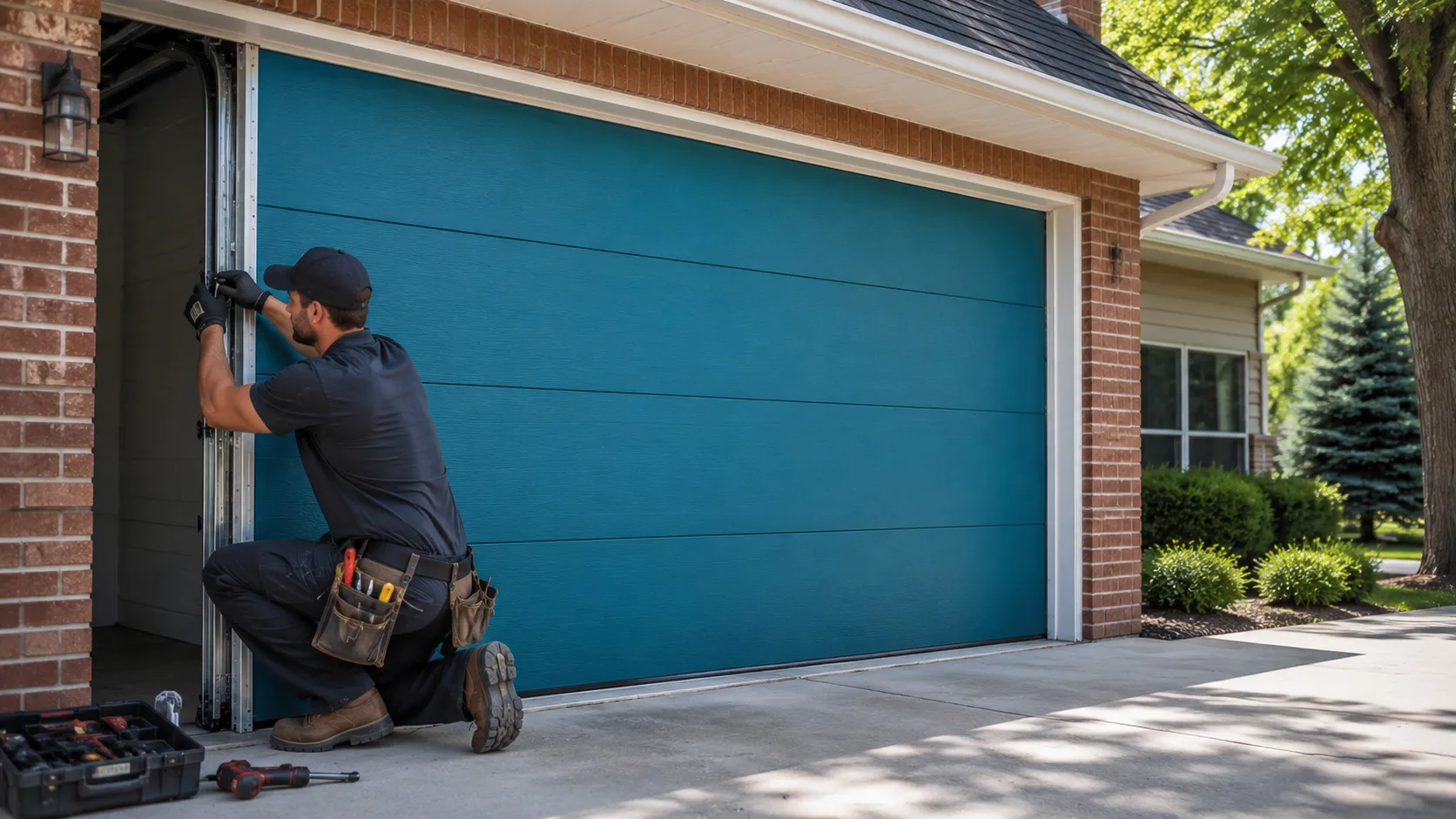
Start by watching the door run a full cycle with the light on. A rhythmic squeak on the way up usually means a dry roller or hinge pin, and that's the one noise on this list you can fix yourself with the right lubricant on the rollers, hinges, and the top of the springs - never on the track. A single loud bang from the spring area, though, is not a lubrication problem.
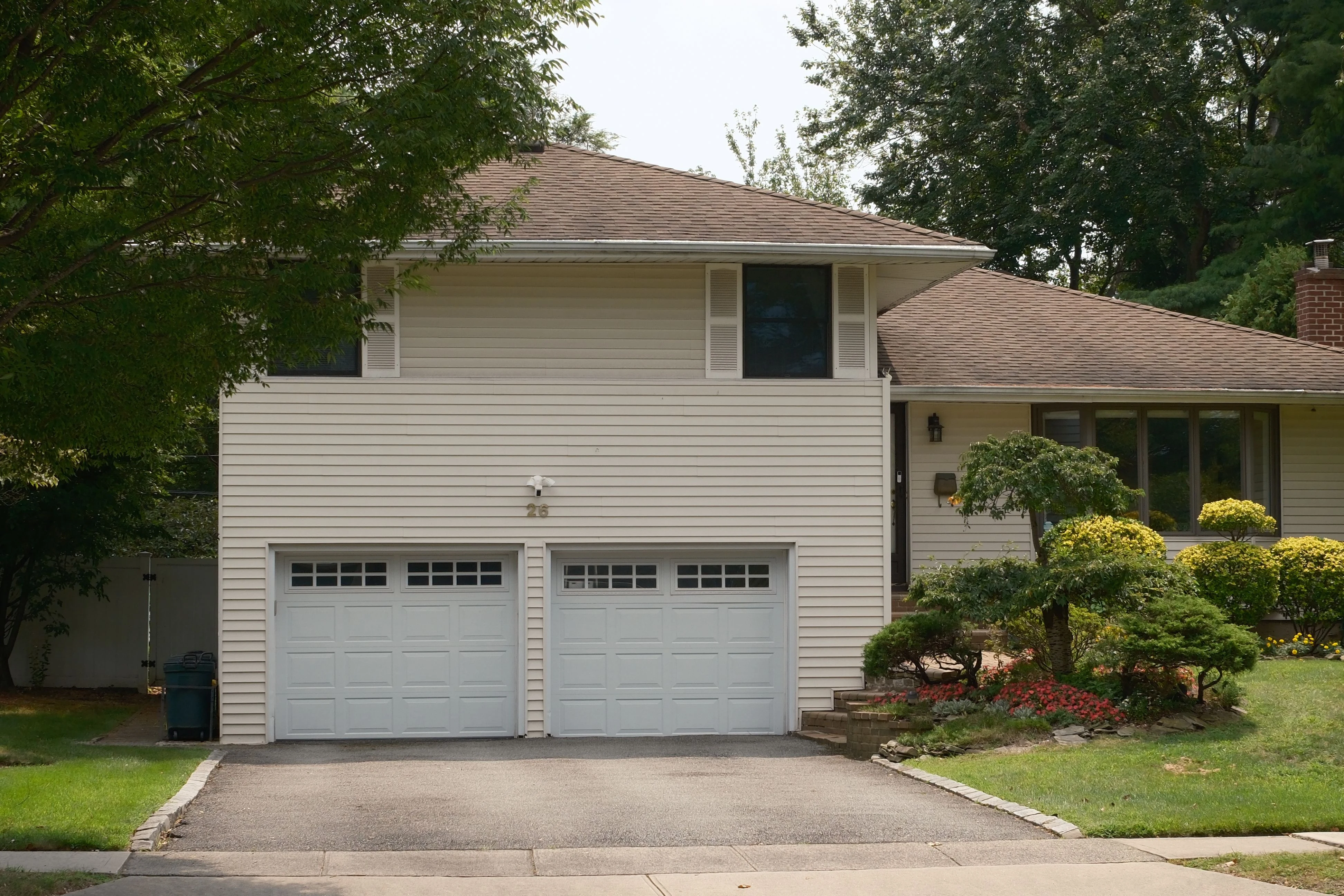
Most houses in this service area went up between 1952 and 1994, with the typical build year sitting around 1973, so a lot of the original torsion hardware is now pushing fifty years old. If your door is original to a house from that era, the noise you're hearing may just be steel and paint that have earned their retirement. Check that the tracks are still bolted tight to the framing and that nothing is visibly bent or rusted through at the bottom brackets. If the noise only happens in the last foot of travel, that's often the opener's limit switch and worth a look before you call anyone. Anything that sounds like metal snapping or a sharp pop, stop and step back from the door.
Write down when the noise happens - opening, closing, top, bottom, cold mornings only - because that detail saves a truck roll.
The area
Leaving It Alone
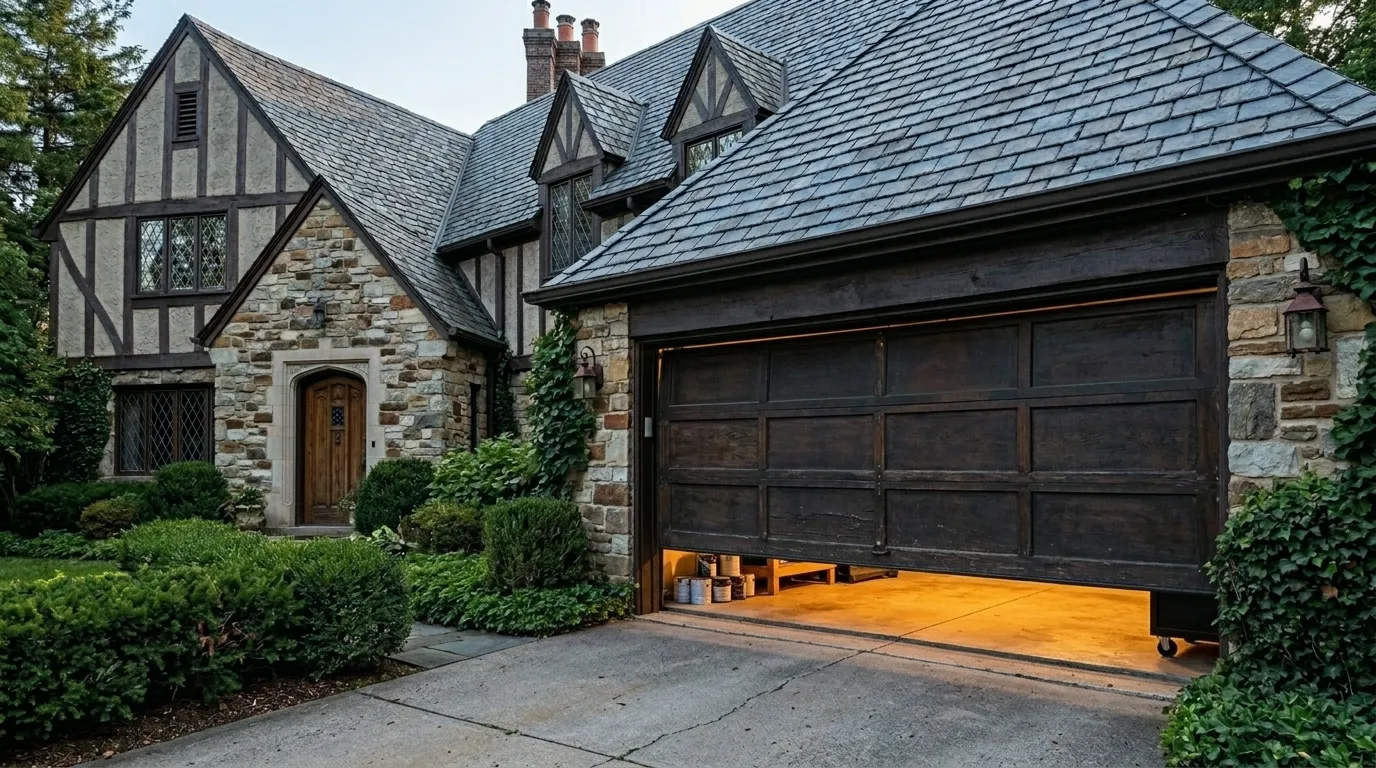
A torsion spring under tension is not a DIY repair, full stop, and this isn't a liability disclaimer, it's physics. A door built in the 1960s or 70s that's still running its factory spring is carrying decades of cycles on a coil that was never meant to last this long. When one of those lets go, it does it fast and with enough force to bend the shaft it's wound around.
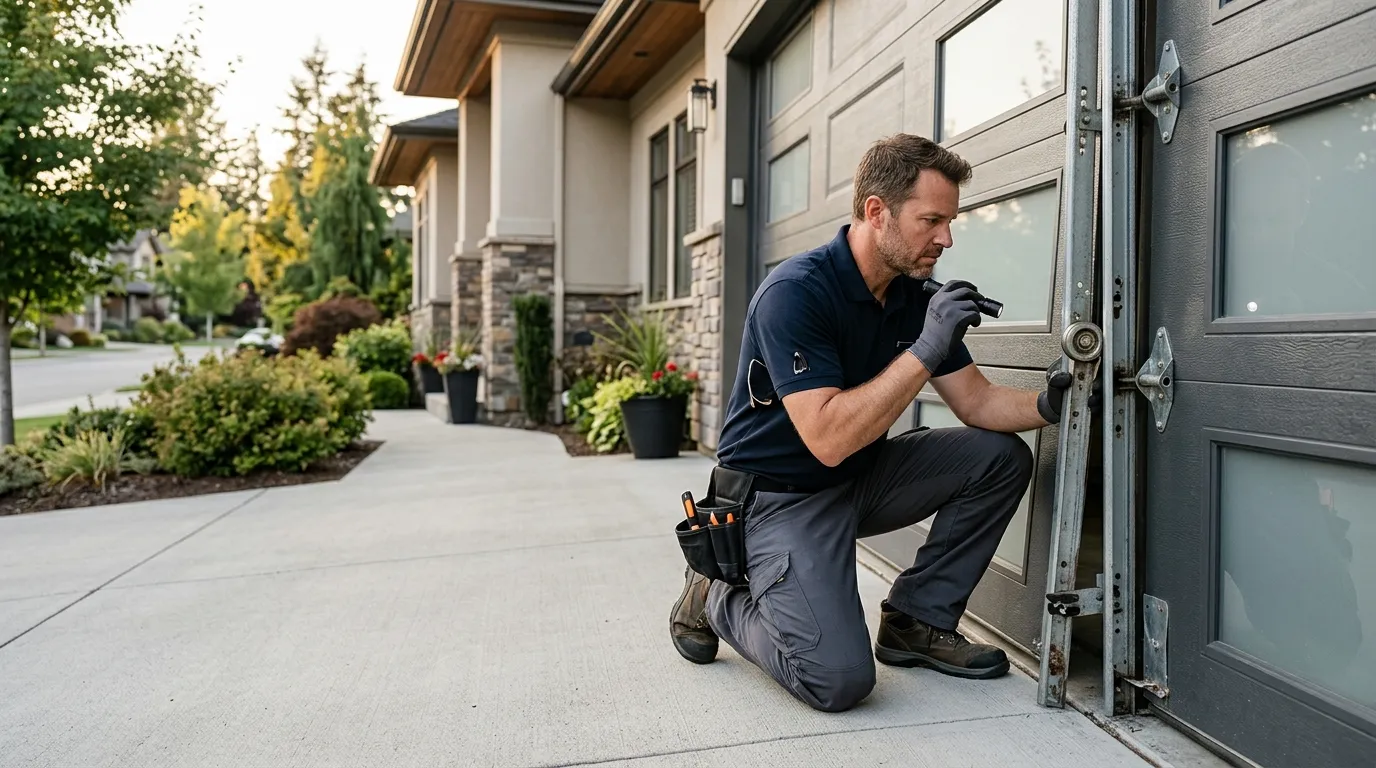
Same goes for cables, the bottom brackets they're anchored to, and anything involving the torsion shaft itself. If the noise is a grinding or scraping sound low on the door as it closes, and you can see a frayed cable strand, don't try to rewind or tape it. That's a same-day call, not a weekend project.
One honest limitation: we can't diagnose a noise over the phone with any confidence. "It's making a clunk" covers a bad roller, a loose hinge, a failing opener gear, and a spring on its way out, and those four things have four different fixes and four different price tags. We'll ask what we can, but the real answer comes from someone standing in front of the door.
What we find
The Situation
Across the sixteen communities in this area, the stock leans heavily toward 1960s and 70s construction, which means galvanized track and steel rollers that have seen five decades of Michigan winters. Out of roughly 18,597 households and 13,974 owner-occupied houses in this area, a good share are running the same one-piece or sectional doors installed when the neighborhood was built.
That matters because steel fatigues on a schedule, not on a calendar you can predict from the outside. A door that's been quiet for years can start popping and grinding within a season once a spring nears the end of its cycle count, and age of the house is the best proxy we have for age of the hardware, since a lot of these doors have never been swapped.
With a median household income of $78,155 across this area, replacing a worn spring set is usually the more sensible call than nursing a fifty-year-old torsion bar through another winter, both because parts for some of the oldest track hardware are getting harder to source and because a spring failure at this age tends to take a cable or a bracket with it.
How we work
How Local Conditions Play In
This area sits in a cold-climate band severe enough that grease inside an opener gearbox thickens overnight, and a door that sounded fine at 6pm can grind at 6am. Cold steel also contracts, which is why a track that's slightly out of alignment in July can bind and squeal in January - the tolerances just get tighter.
On houses from the 1952-1994 build range, the original tracks were set to the framing tolerances of that era, and decades of freeze-thaw movement in the slab or apron can shift a track's alignment by a fraction of an inch. That's enough to turn a smooth roll into a rhythmic knock every winter and go quiet again by May, which is why some owners assume the noise fixed itself. It didn't - the metal just warmed back up.
A popping sound specifically on the coldest mornings, before the door has run a few cycles, points to stiff lubricant or a spring that's lost tension in the cold rather than a broken part. Warming the garage a few degrees and running the door twice sometimes clears it, but if the popping doesn't ease up after a couple of cycles, that's worth a call rather than a wait-and-see.
Questions
Common questions
My garage door makes a loud bang once and then runs fine - is that normal?
No. A single loud bang, especially near the top of the door's travel, is often a torsion spring reaching the end of its life or already broken, even if the door still opens. Don't run it again until someone's looked at the spring and cable condition, since a partially failed spring can drop the door unevenly.
Why does my door only squeak in the winter?
Cold thickens lubricant and contracts steel track, tightening tolerances that were fine in summer. Houses in this area built between 1952 and 1994 often still have original track set to older framing measurements, so seasonal movement shows up as noise that disappears again once temperatures climb.
Can I just spray WD-40 on everything that squeaks?
Spray a proper garage door lubricant on rollers, hinges, and spring coils, not the track itself - lubricant on the track attracts grit and makes rollers slip. WD-40 is a cleaner, not a lasting lubricant, so it'll quiet things for a day and then squeak again.
How do I know if it's the opener or the door itself making noise?
Disconnect the opener using the manual release and move the door by hand through a full cycle. If it's smooth and quiet, the opener chain, gear, or trolley is the likely source. If it grinds or catches by hand too, the problem is in the door hardware itself.
Ready when you are
Need a garage door sorted in Midland?
Midland Garage Door Pros repairs and installs garage doors, springs and openers in Midland, MI and the surrounding area.