Panel Replacement for Homer's 1970s-Era Garage Doors in Midland

Homer, Midland

Panel Replacement for Homer's 1970s-Era Garage Doors

Homer homes built around 1974 carry steel doors from that era. We match panels on original hardware or replace the section - see what it runs and what slows a job down.

Serving Midland, MIBackground-checked techsHonest, upfront pricingFast local response

Pricing

What It Costs

A single-panel swap on a door from Homer's building era usually costs less than a full door replacement, but the number moves depending on whether the section is still made or has to be matched by embossing pattern and color.

1970s door specifications

Houses here went up mostly in the early-to-mid 1970s, which is right in the middle of the wider Midland service area's 1952 to 1994 build window (median 1973). That means a lot of these doors are steel, 24-gauge, with a raised-panel or flush design that was standard for that decade.

Original panel matching

If your door is one of the surviving originals, we price the job around finding a matching section, not swapping the whole door - that's the honest way to keep the bill down.

Panel-only repair costs

If nothing close to a match exists anymore, replacing all the sections on that side ends up cheaper than paying a premium to hunt down one obsolete panel, and we'll tell you that up front instead of running the search for you.

Booking

Getting It Booked In

We work out of Midland, and Homer sits about 5 miles out, so there's no separate branch here - a truck comes from Midland for the appointment. Booking works the same as anywhere else in the coverage area: you tell us the door make, the panel that's damaged, and roughly how old the door is, and we bring stock that fits doors from that build era rather than guessing on-site. Homer's household income runs well above the wider service area's median of $78,155 - it's $106,618 here - which we mention only because it shapes what people ask for: more owners here go straight to a full panel-and-hardware refresh rather than a patch job, and we price both options so you can pick.

Getting It Booked In

Watch-outs

The Complications

The complication with a house built in 1974 isn't the panel - it's what's behind it. Doors from that era often ran on hardware nobody has stocked in years: end hinges with a slightly different bolt pattern, or a track gauge that doesn't match what current panels are drilled for.

Hinge and roller swaps

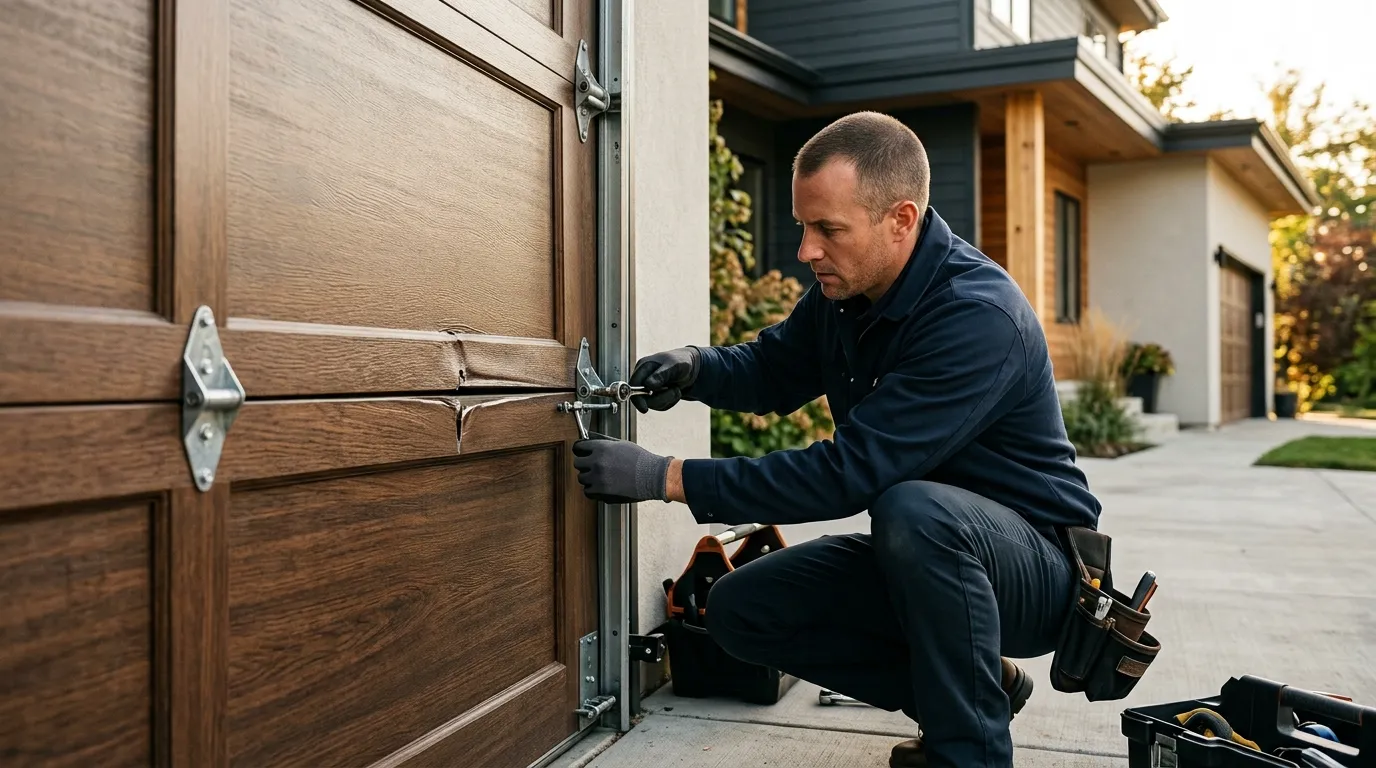
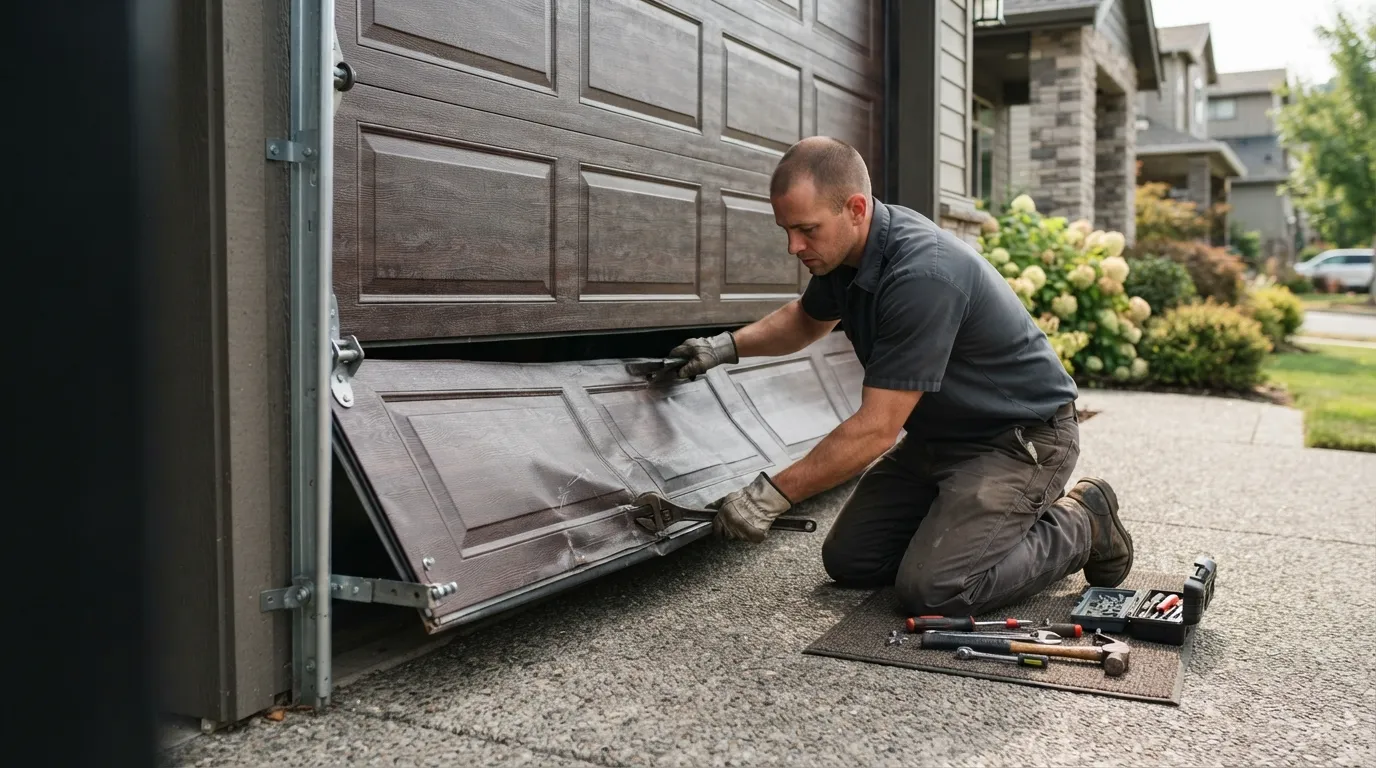
If your section is cracked but the hinges and rollers are original, we may need to swap those too just to hang a modern-spec replacement panel straight.

On-site hardware evaluation

We won't know for certain until we're looking at the actual door, and that's the one honest limit here - we can quote a range from the model and year, but the final number depends on what the hardware looks like once the damaged section comes off.

The Symptom

Symptoms

The Symptom

The giveaway on a door this age is usually a section that's dented, rusted through at the bottom seam, or bowed enough that the door doesn't sit flush when it's down. Steel from the 1970s wasn't galvanized the way panels are now, so once moisture gets behind a dent, rust works from the inside out - you'll see bubbling paint before you see the hole. On a cold-climate door like the ones common through this area, that bottom panel takes the worst of it: road salt spray, freeze-thaw cycling, and the weight of ice sitting on the bottom weatherseal all season.

Why It Happens Here

Local causes

Why It Happens Here

This part comes down to climate and age together. The wider service area sits in a cold, severe-winter band, and a door built in the early 1970s wasn't insulated the way current sections are - most were a single skin of steel with no polystyrene or polyurethane core. That single-skin steel flexes more in temperature swings, and repeated flex at a dent or a seam is what eventually cracks a panel clean through. It's less about one bad storm and more about fifty winters of the same door expanding and contracting without the backing a modern panel has.

Questions

Common questions

Can you match the panel color and pattern on an older door in Homer?

Sometimes. If the door is a common brand from the early-to-mid 1970s we can often find a close match in gauge and embossing. If it's been repainted or is an uncommon model, an exact match isn't guaranteed, and we'll say so before you commit to a repair instead of a full door.

Is it cheaper to replace one panel or the whole door?

Depends on the door. One panel is usually cheaper up front, but if the hardware underneath is original and doesn't match current panel specs, the labor to make an old panel and new hardware work together can close the gap. We quote both so you can compare.

Do you have a branch in Homer?

No. We run out of Midland, about 5 miles away, and send a truck out for scheduled jobs. There's no separate local office or drop-in counter in Homer itself.

Why does the bottom panel fail first on older doors here?

Cold, severe winters mean freeze-thaw cycling and road salt spray hit the bottom section hardest, and 1970s-era steel doors weren't insulated the way current ones are, so that panel flexes more and rusts from the inside once a dent lets moisture in.

Ready when you are

Need a garage door sorted in Midland?

Midland Garage Door Pros repairs and installs garage doors, springs and openers in Midland, MI and the surrounding area.

Call Now(989) 279-1854