Checking It Yourself
Midland's housing stock runs 1952 to 1994, with a lot of it sitting in the 1960s and 70s window. That matters here because openers from that era, and even the replacements installed on those same houses in the 80s and 90s, were built assuming steady power and a garage that stays above freezing most of the year. When the power cuts, the first thing worth checking is whether your opener has a manual release cord - the red handle hanging from the trolley. Pull it toward the motor unit to disengage the carriage, and you should be able to lift the door by hand. If the door is heavy or won't stay up on its own, that's a spring problem, not a power problem, and pulling the release won't fix it - stop there. Check your breaker panel next. A cold snap that trips a circuit is common in this climate band, and a reset is often all it takes. If the opener has battery backup, listen for a chirp or beep pattern, which usually means the battery is drained, not dead - give it time on restored power before assuming it needs replacing.
Leaving It Alone
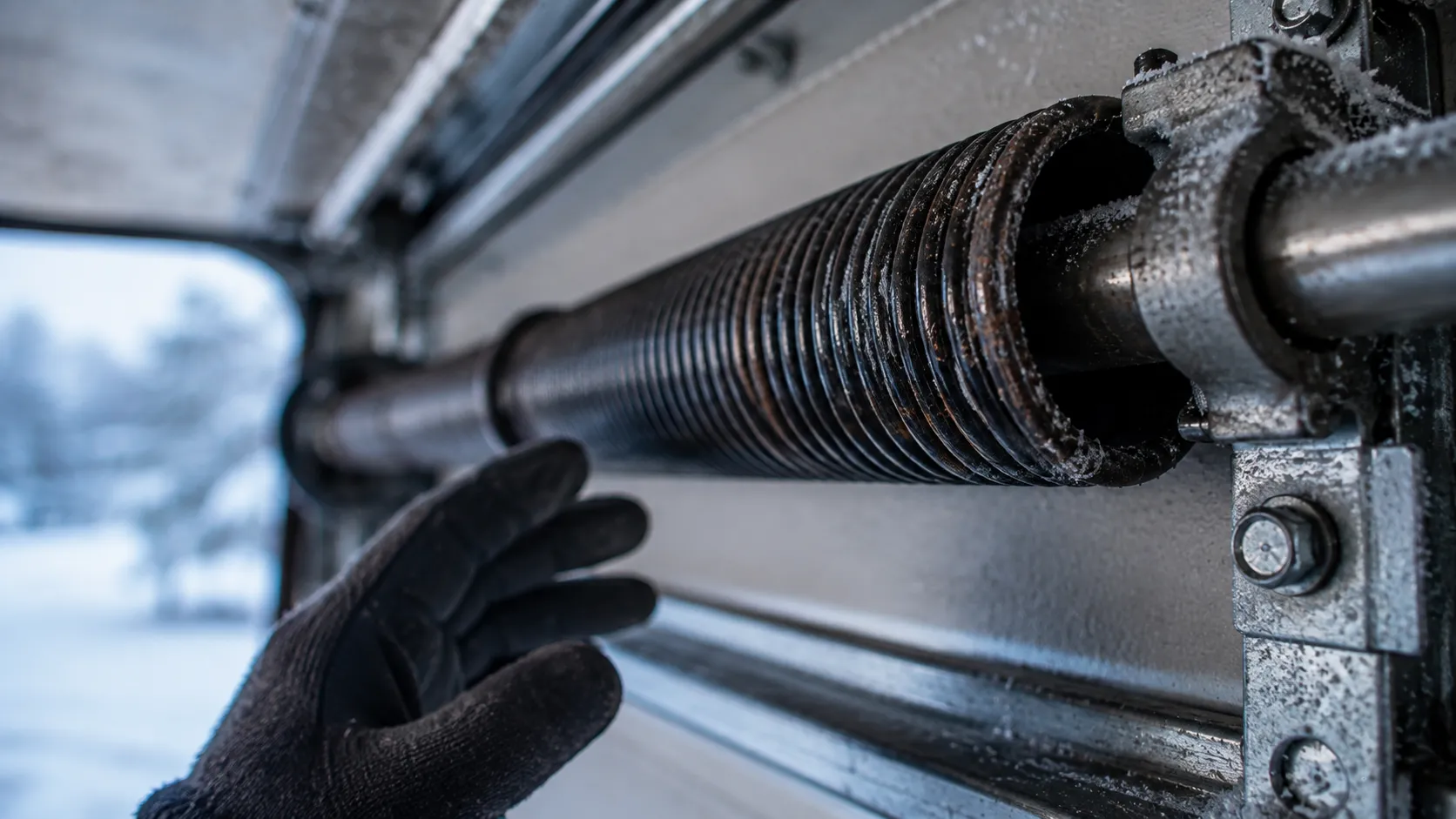
Don't force the door up by hand if it feels heavier than usual once you've pulled the release. On a house from the 1960s-70s stock that's original or near-original, a heavy pull often means a spring that's already weakened, and cranking it open by hand can snap it the rest of the way with your fingers near the cable. Also leave the opener's logic board alone if the power cut caused any burning smell or visible arcing at the outlet - that's an electrical issue for someone licensed, not a garage door issue. And if the opener is one of the original units from a home built in that 1952-1994 window and it's never been swapped, don't try to reprogram or rewire it during a power event. Older units in this housing stock often use wiring and connectors that don't match anything sold today, and working on them live invites a shock or a fried board for no reason.
The Situation
Midland sits in a cold, severe climate band, and that shapes how openers fail here more than most homeowners expect. It's not usually the motor that goes first - it's the sensors, the wiring insulation, and the battery backups that can't hold a charge once the garage drops toward freezing. A power cut in warmer weather is a minor inconvenience. The same cut in January, on a door that was already struggling with cold-stiffened hardware, tends to be the moment an opener that was limping along finally quits. Across the roughly 13,974 owner-occupied houses in this service area, a good share are still running openers original to a build era that predates today's rolling-code security and battery-backup standards, which means a power event exposes weaknesses that a working grid had been covering up.
How Local Conditions Play In
With 18,597 households spread across this area and median household income around $78,155, most owners here are weighing a repair against a full opener swap rather than defaulting to either one. That decision usually comes down to age and how the unit handled the last few winters, not just this one outage. Homes closer in - toward Homer or Lincoln - and the farther ring out past Sanford and Freeland share the same housing-age pattern, so the same opener logic applies whether you're five miles out or fifteen. One honest limit: if your opener was already flagged as failing before the power cut, a battery backup or a breaker reset is a patch, not a fix, and we won't pretend otherwise on a job.
Talk to a local pro
Garage door trouble in Midland?
Same-day service with honest, upfront quotes.