Checking It Yourself
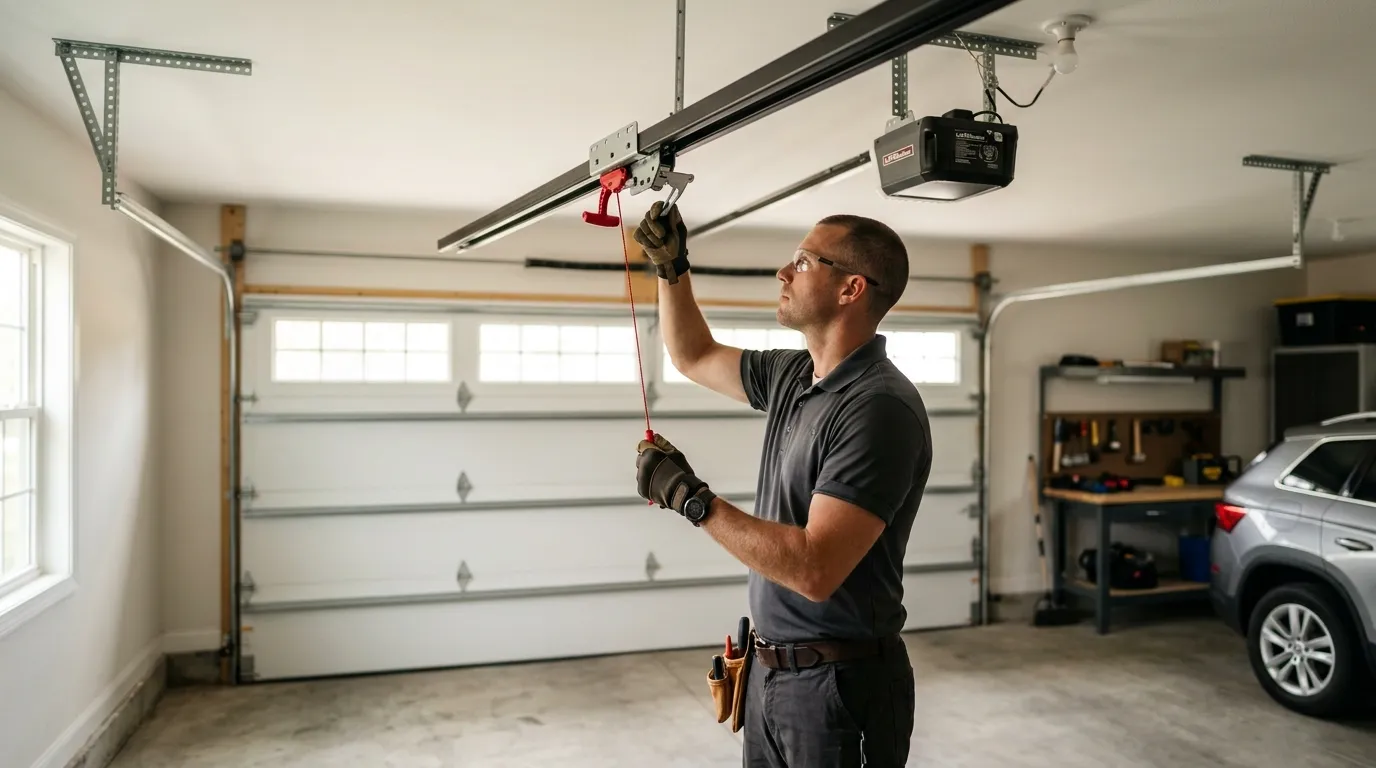
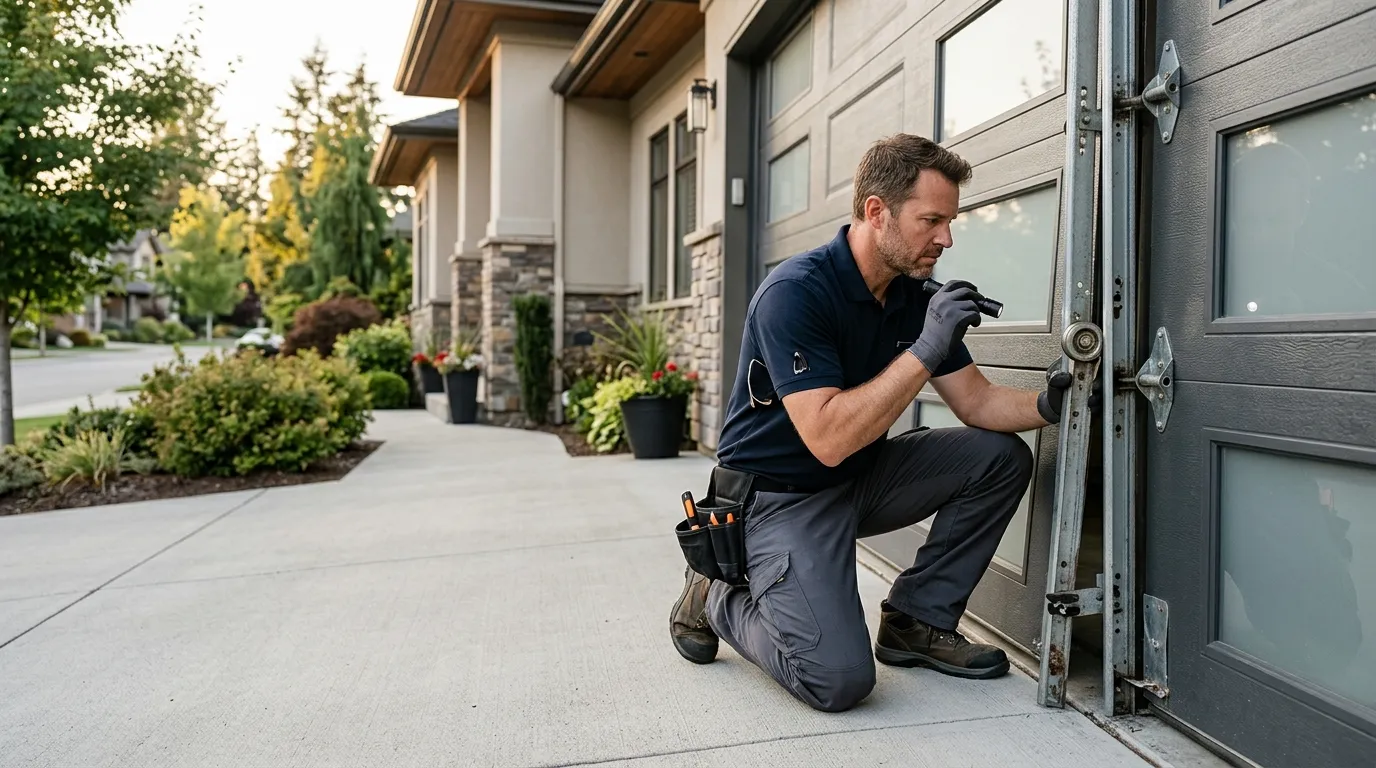
Most houses in this service area went up between 1952 and 1994, with the median right around 1973, which puts a lot of original torsion hardware still hanging in these garages. Start at the bottom panel. Steel doors from that era rust from the inside out along the bottom seal, and if you can flex the panel with one hand, the door has been soaking up water for years. Next, look at the spring. A stretched or unevenly coiled torsion spring on a door this old is a sign the coil is near the end of its life, not a fluke. Pull the release handle with the door down and lift by hand - it should move with light, even resistance. If it drops or feels dead weight, the spring is doing none of the work anymore. Check the track bolts for rust bleed and the rollers for flat spots. None of this tells you the door is dead. It tells you whether the money you'd spend goes into a door that still has a working frame and panel set, or into patching something that's already failing somewhere else.
Leaving It Alone
Here's the honest limit: we don't recommend anyone open a wound torsion spring themselves, no matter how straightforward the video makes it look. That part alone puts people in the ER every year, and it's not worth the money saved. Beyond that, there's a point where a door isn't worth fixing at all. If the bottom two panels have rusted through, if the track is bent in more than one place, or if the door is original to a house built in the early 1950s and the hardware is no longer made to match, you're not repairing a door - you're rebuilding one panel at a time and paying labor for each trip. A new spring on a door with a rotted panel just moves the failure point somewhere else. If the frame is still square and the panels are sound, most of what fails on these older doors - springs, rollers, cables, openers - is a straightforward repair. If the panel set itself is gone, replacement is the honest answer, and we'll say so instead of running up a repair bill on a door that's not going to last another winter regardless.
The Situation
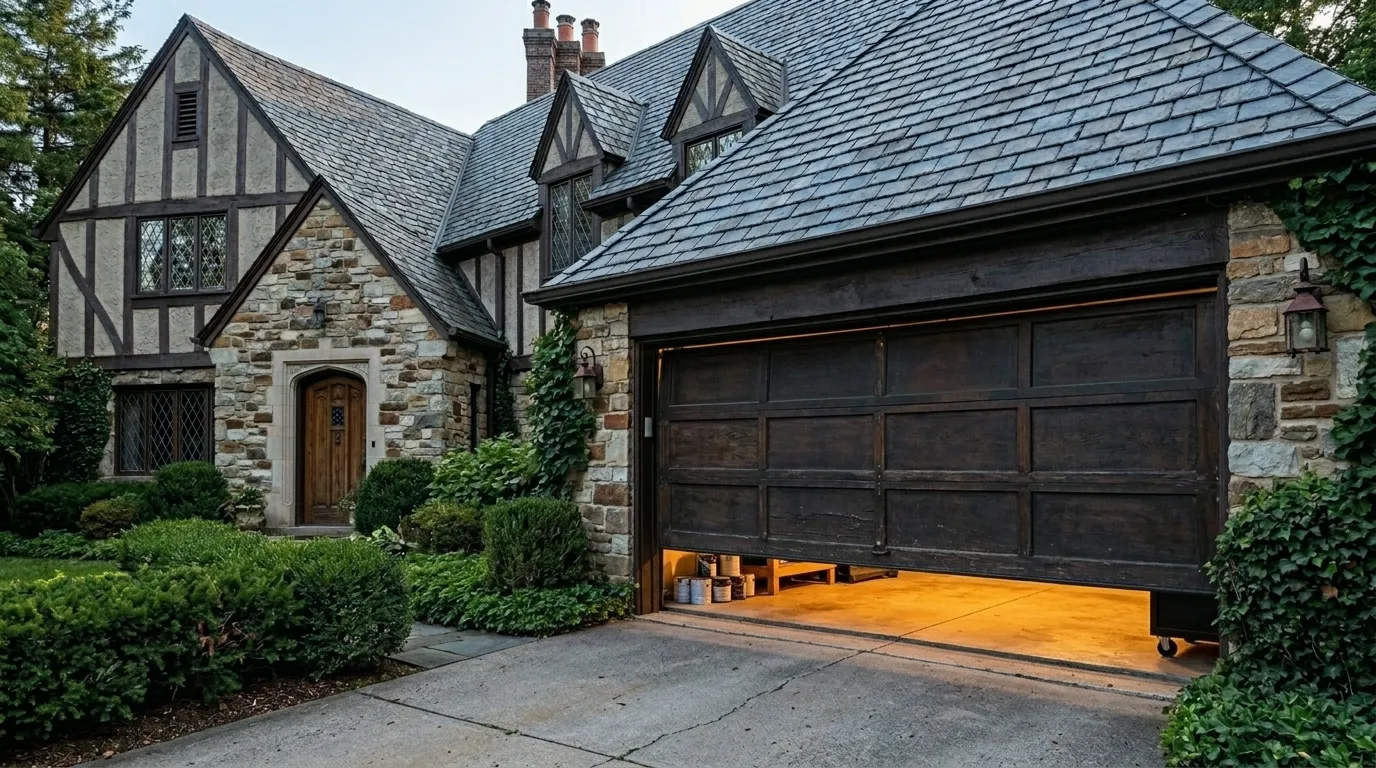
Across the 18,597 households in this area, 13,974 are owner-occupied houses, and a fair share of those garages still carry a door installed sometime in the 1960s or 70s, matching the housing stock's construction era. That's not a small number of doors approaching or past their expected working life at the same time. With median household income at $78,155, a lot of owners weigh a $200 spring job against a $1,200 replacement and the numbers matter - nobody here is replacing a door on a whim. The math usually comes down to how much of the original door is still sound. A torsion spring and a set of rollers on an otherwise solid steel door is cheap insurance. A full teardown because the panel skin has failed is a different conversation, and it's worth having before you spend anything on a door that's already past the point of a simple fix.
How Local Conditions Play In
Midland's cold band is rated severe, so a worn seal or a spring that's lost its temper shows up fast in January, not gradually. Cold steel contracts, and a spring that was already fatigued from decades of temperature swings tends to fail on the coldest morning of the year, not the mildest. Bottom seals harden and crack in the cold faster than owners expect, which lets wind and snow melt into the garage and speeds up the rust that eats those older steel panels from underneath. The area runs from Homer five miles out to Essexville twenty miles, and the door stock across that stretch skews to the same 1960s-70s build era, so a lot of these decisions look similar house to house - it's less about one street being different from another and more about a whole generation of doors reaching the same age in the same climate at roughly the same time.
Talk to a local pro
Garage door trouble in Midland?
Same-day service with honest, upfront quotes.