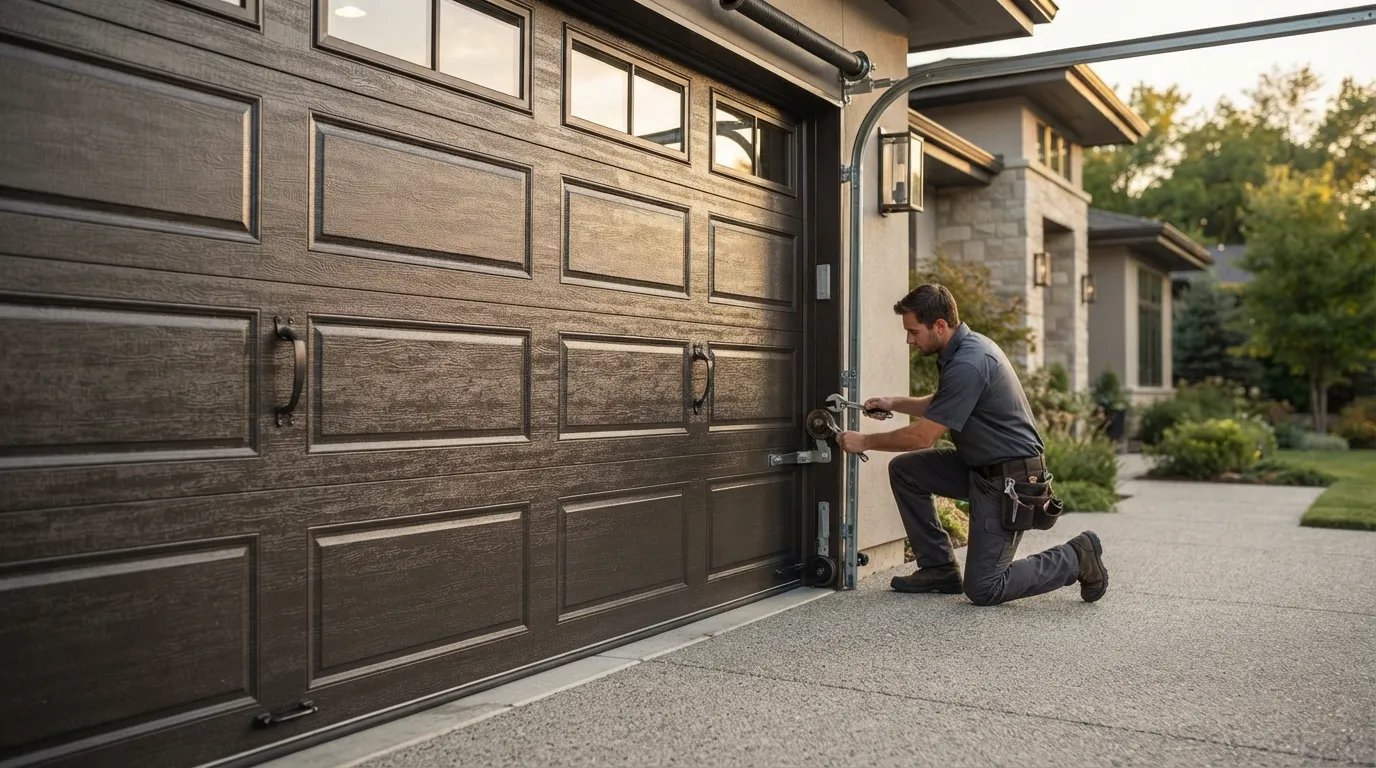
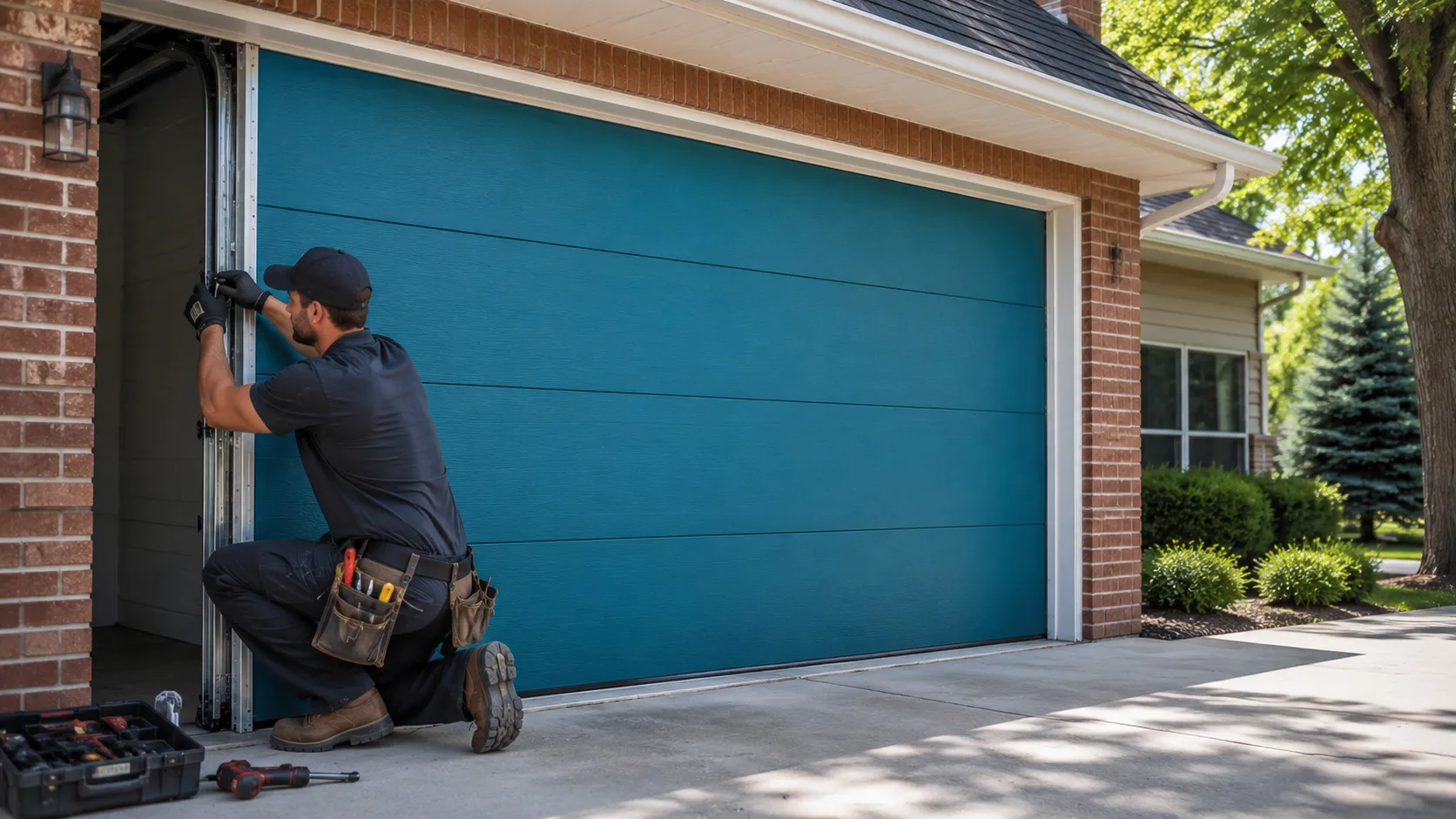
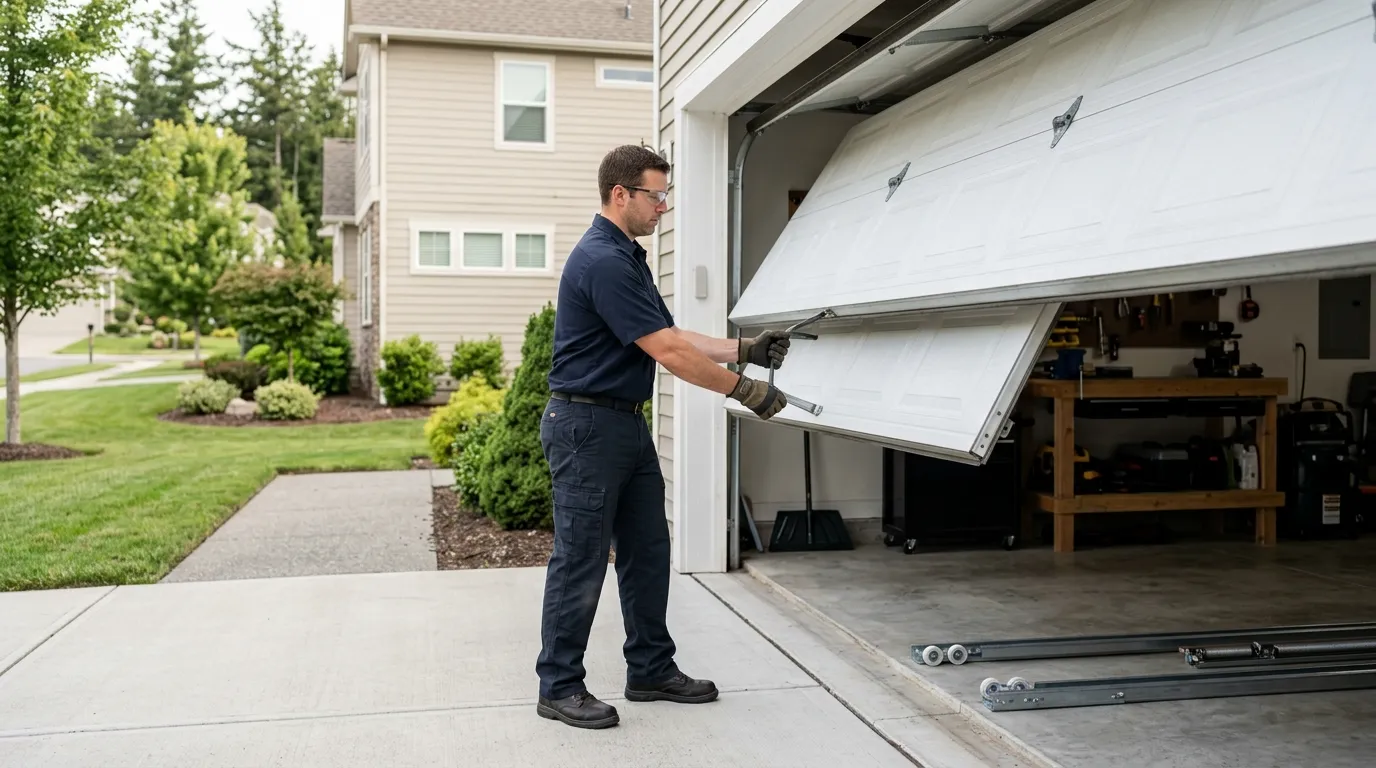
Most of the housing stock around Midland went up between 1952 and 1994, with the bulk of it dating to the 1960s and 70s across the 16 communities in this service area - Homer, Lincoln, Auburn, Sanford, Freeland, Richland, Kawkawlin, Hemlock, Merrill, Shields, Bentley, Fraser, Zilwaukee, Fremont, Breckenridge, and Essexville. The commercial strips, small warehouses, and light-industrial units that filled in around those neighborhoods largely followed the same building wave, and a lot of them still run doors, tracks, and torsion hardware sized to that era's construction. That hardware wasn't built for the cycle count a commercial door sees today, and it wasn't built for what this region's climate does to steel.
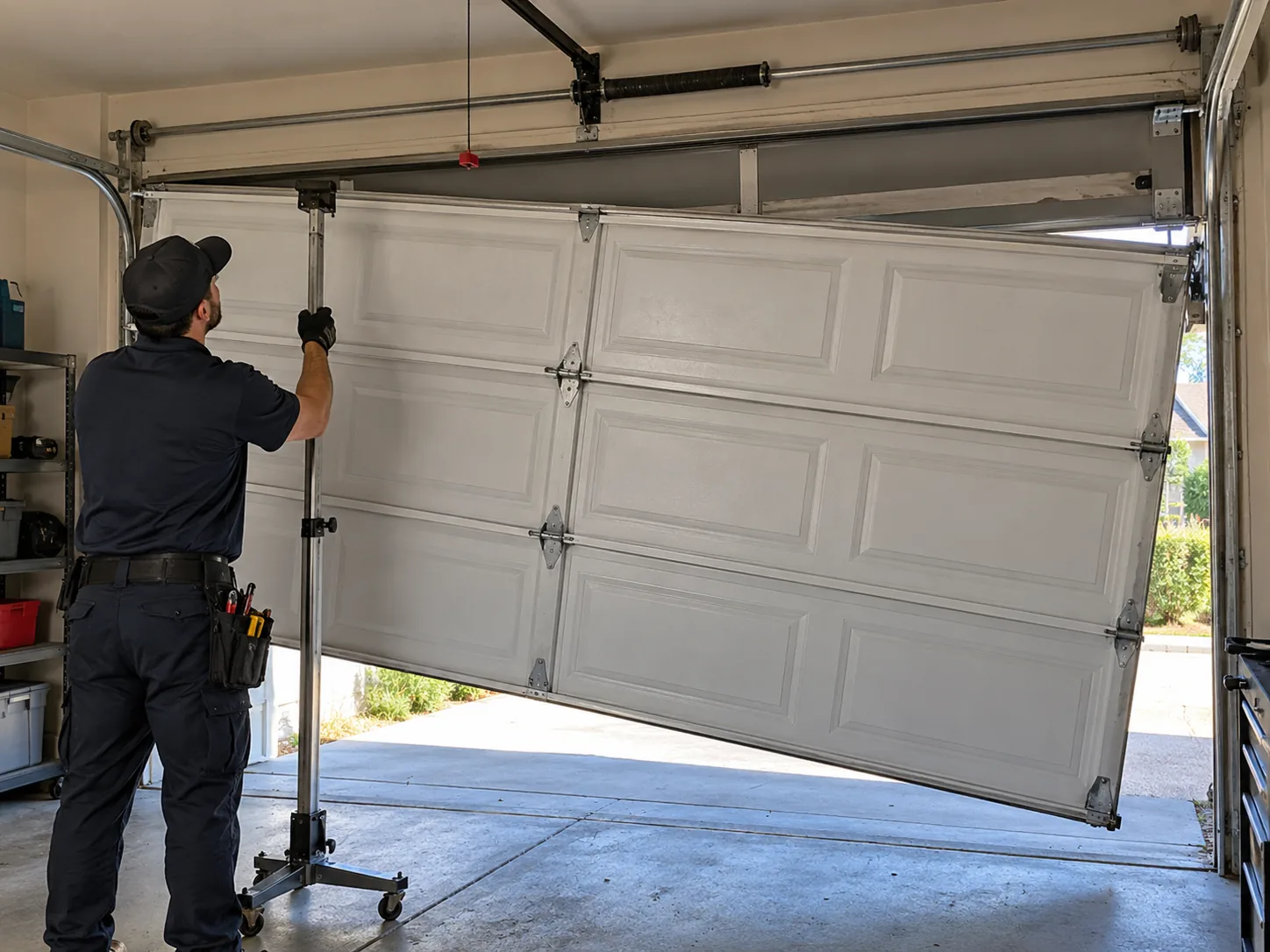
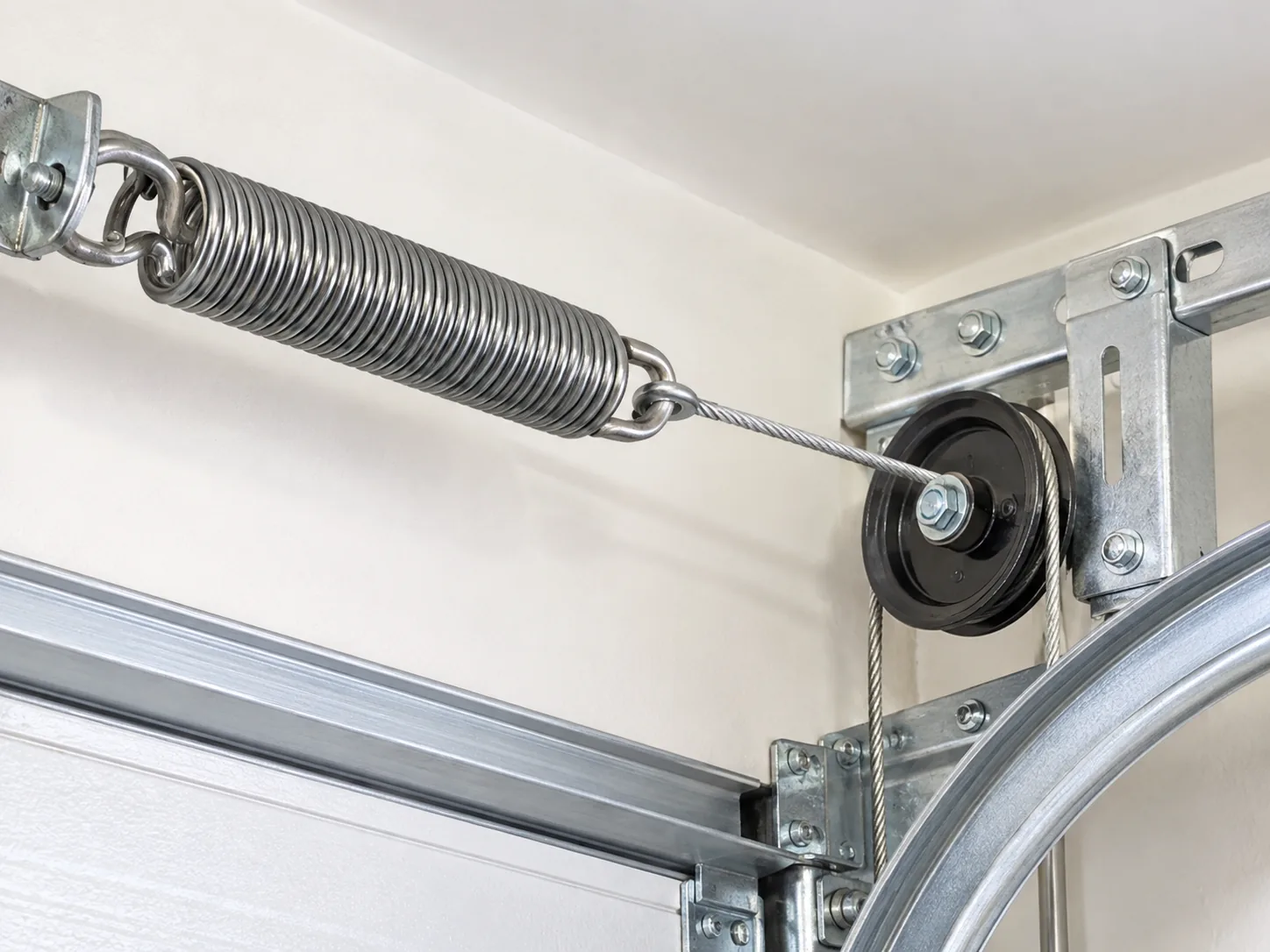
This area sits in a severe cold climate band. Steel roll-up panels and track sections contract in deep cold, which is enough to bind hardware that's been sitting in the same alignment for decades. Torsion springs lose tension faster when they're cycling through temperature swings dozens of times a day, which is normal for a loading dock or a service bay door, not for a garage door doing two trips a day. Put an older door on a high-cycle commercial schedule in this kind of cold, and the spring or the roller bearing gives out well before it would on a residential door of the same age.