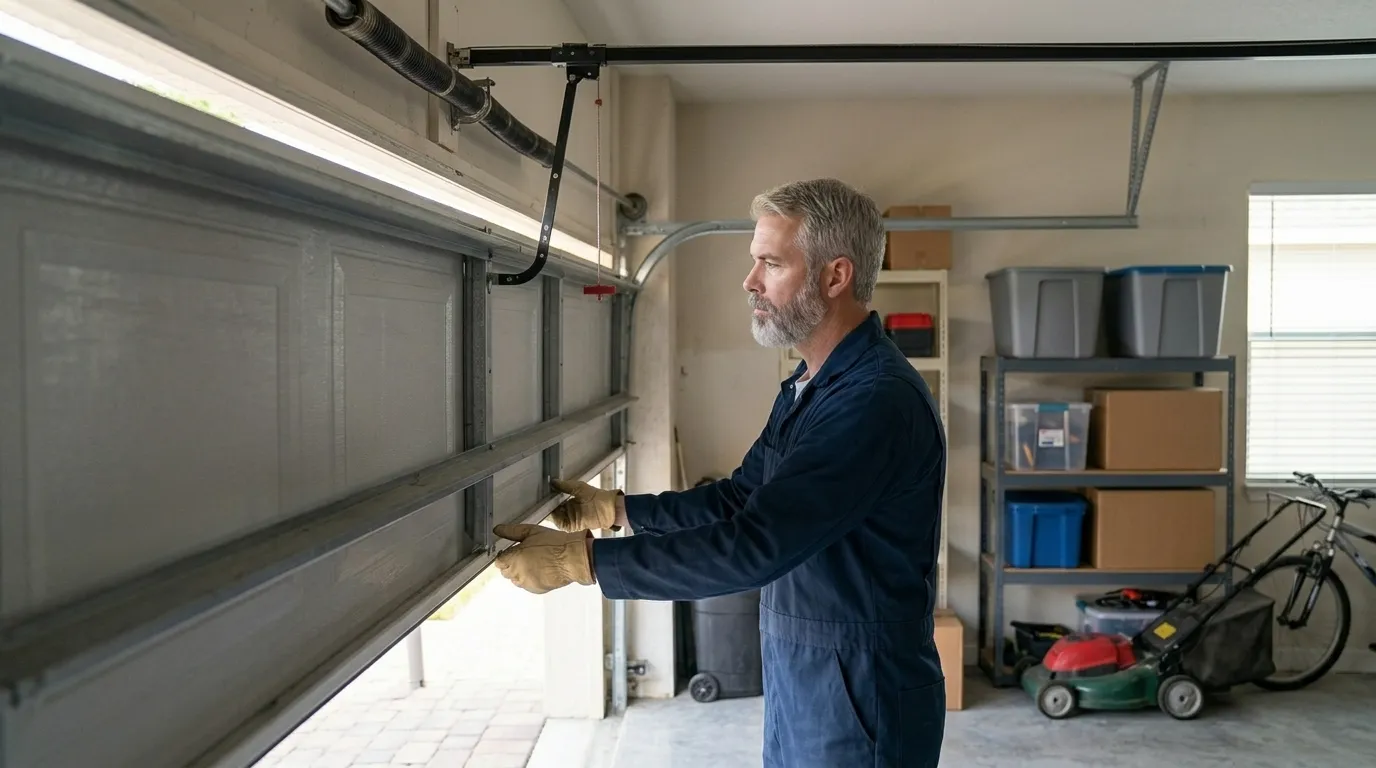
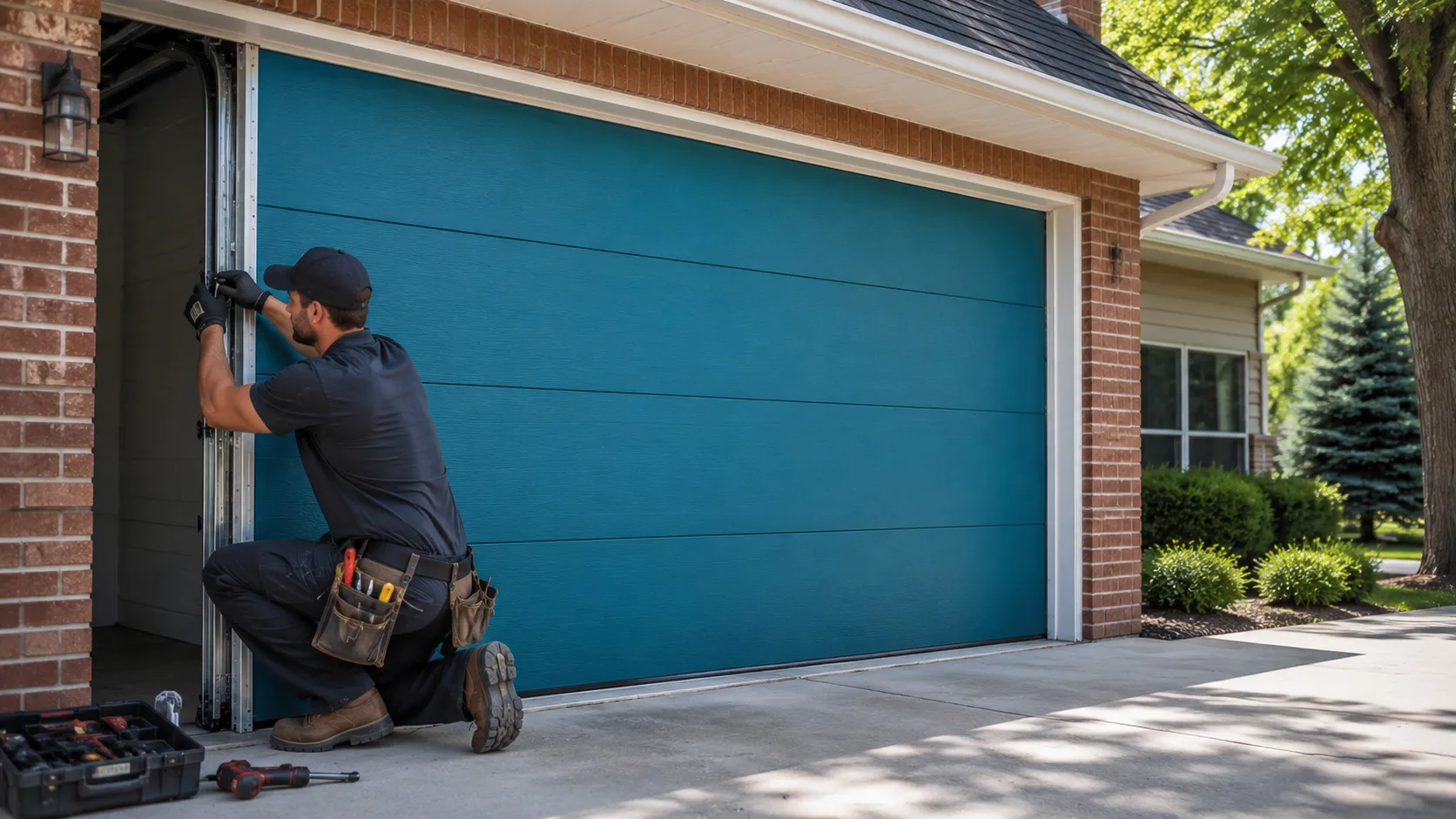
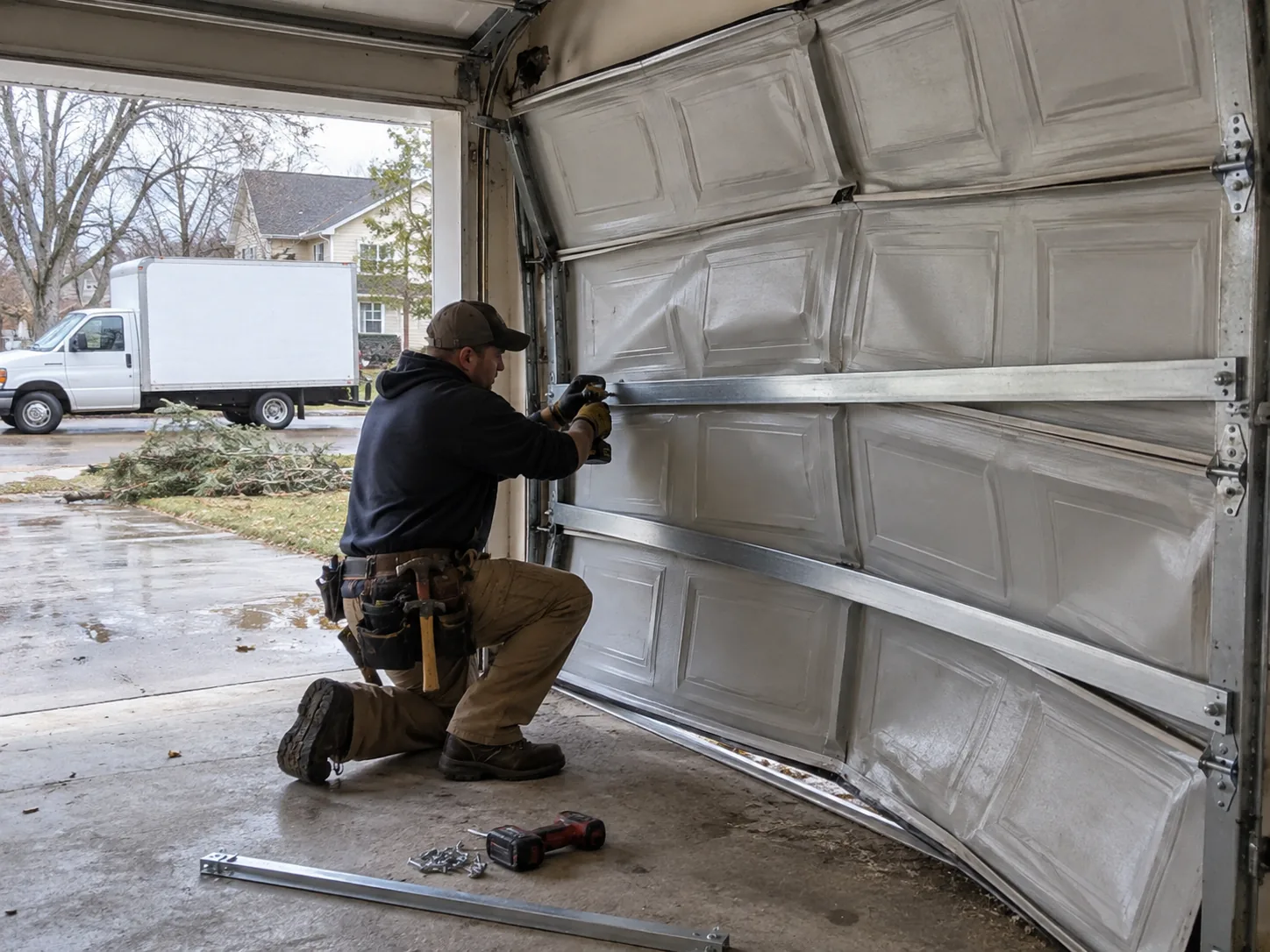
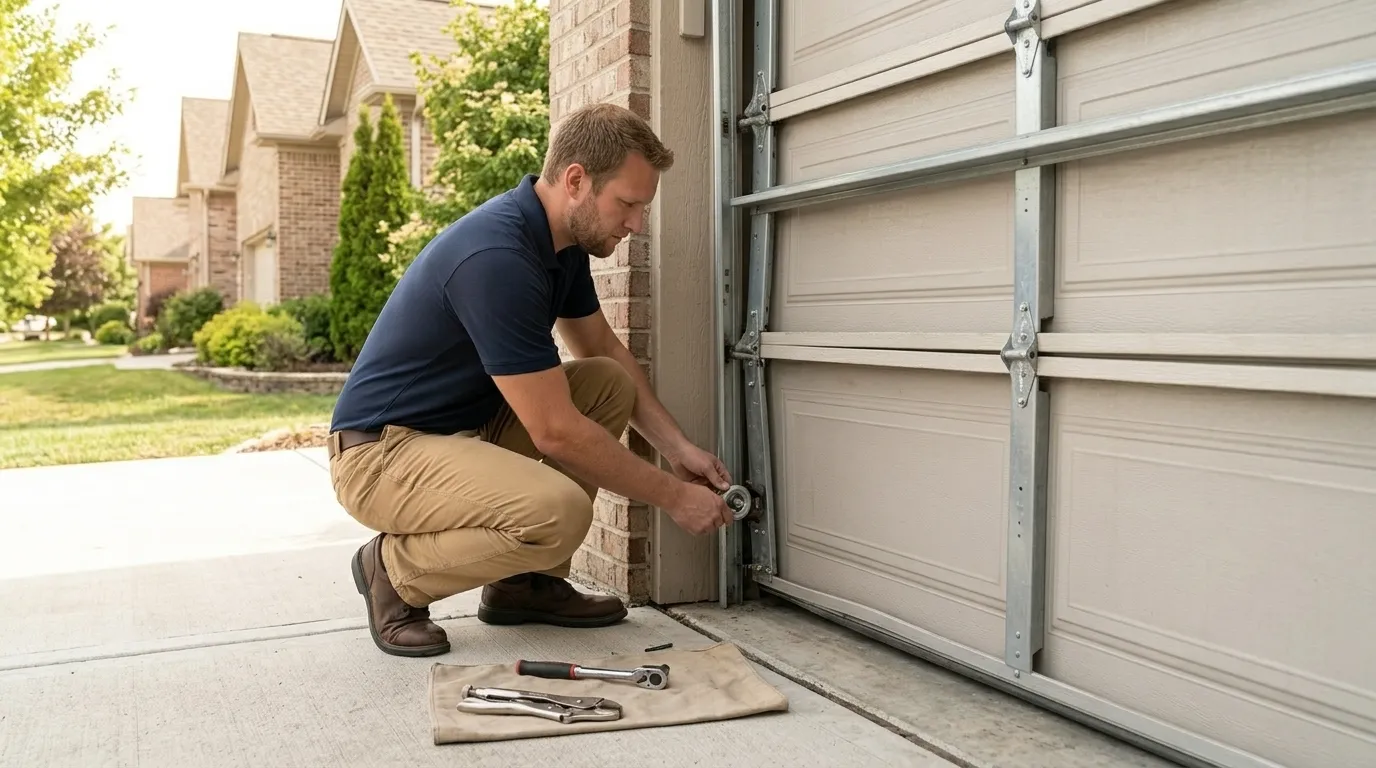
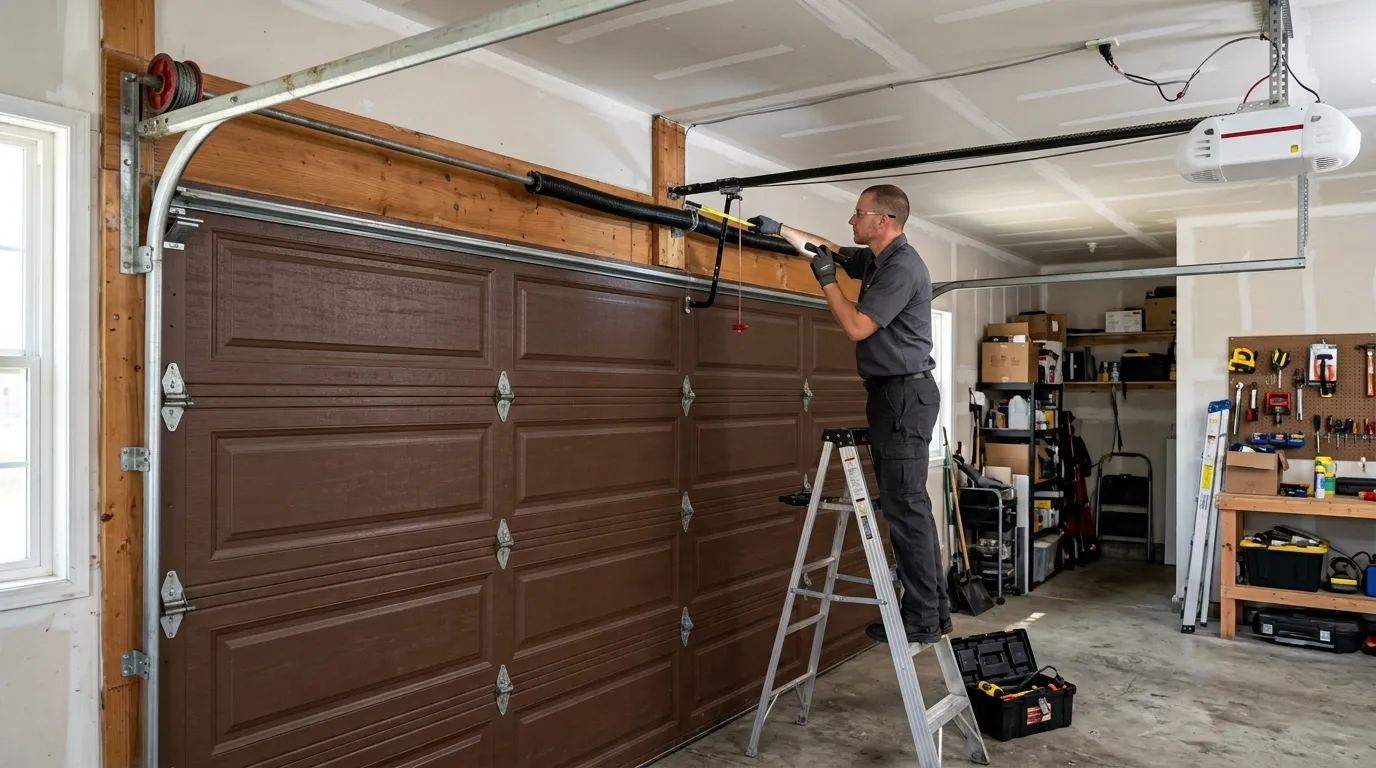
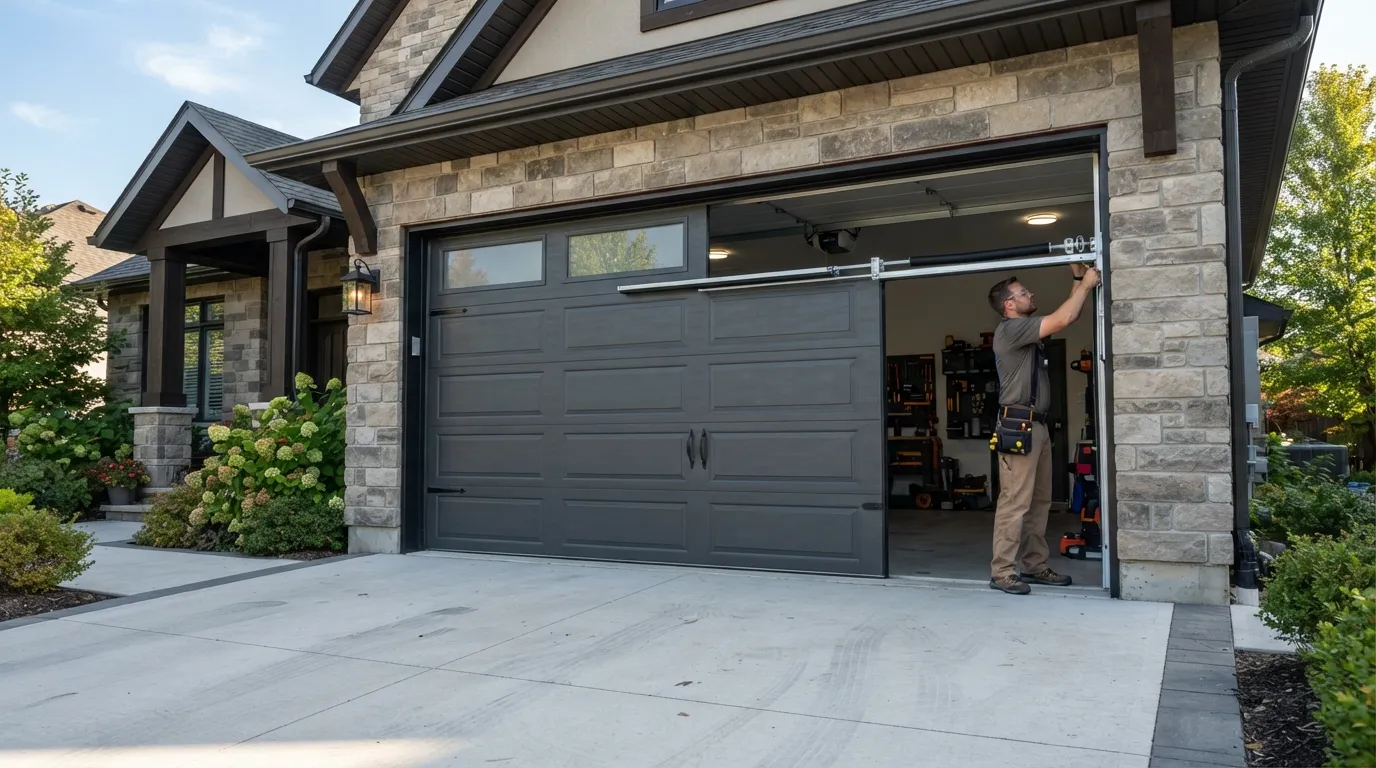
The climate band here runs cold and severe, and steel panels take that differently depending on age and finish. A panel built in the early 1990s has had three decades of freeze-thaw cycling at the bottom seam, where road salt and snowmelt sit longest, and that's usually where the rust starts even on a door that looks fine everywhere else. Freeland's households skew toward higher income than the broader service area - median household income here runs above $100,000, compared to roughly $78,000 across the wider area - and what we see on service calls is fewer patched-together doors and more owners who want the replacement section to match the rest of the door exactly, not just close. That preference drives more of our Freeland jobs toward full double-section swaps instead of single-panel patches, because a visible color mismatch on a newer-looking door bothers people here more than it does on an older one that's already showing its age everywhere.